Cute School Animals Vector: An Embroidery Designer’s Real-Stitch Review
First Glance: Line Art That Feels Like a Storybook
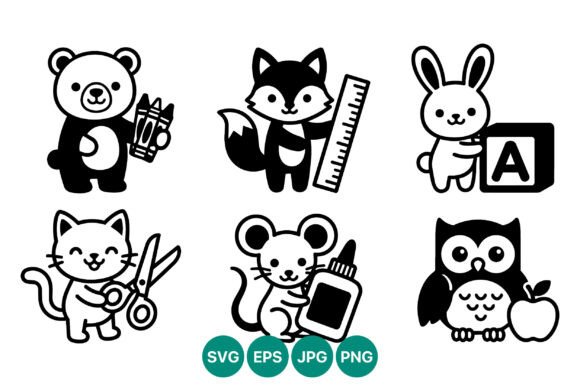
When I opened the Cute School Animals Vector file, I immediately felt like I was holding a page from a vintage classroom primer. The six characters—bear with crayons, fox with ruler, bunny with alphabet block, cat with scissors, mouse with glue bottle, and owl with an apple—are drawn in clean, uncomplicated vector line art. The black and white palette is deliberate, not limiting. It gives the whole set a woodcut-storybook mood that feels timeless and gentle, perfect for projects aimed at children, teachers, or anyone who loves a nostalgic craft aesthetic.
The simplicity is what caught my design eye. No shading, no heavy fills, just confident outlines. For an embroidery designer, this is a gift. It means the shapes translate beautifully into running stitch or thin satin stitch paths without becoming a dense, puckered mess. The characters are expressive without being cluttered. The bear’s tiny crayons, the bunny’s block letter, the owl’s apple—they add just enough detail to read clearly at a small scale, but not so much that you’ll lose them in thread. This is a vector set that already knows where it’s going before you even digitize it.
Putting It to the Test: The First Day of School Tote
Let me walk you through a real project scenario. I had a client who runs a small handmade shop and wanted a personalized “My First Day of School” tote bag for a kindergarten teacher’s gift. She needed something sweet, gender-neutral, and quick to stitch. I pulled up the Cute School Animals Vector, chose the fox with the ruler and the owl with the apple, arranged them in a playful row, and resized them to fit a 5x7 hoop. The line art looked crisp on-screen, and because the vectors are already simple, I didn’t have to spend an hour manually cleaning up nodes before digitizing.
Once I converted the outlines to a single-run stitch and added a few spot fills for the apple and crayons, I tested it on a medium-weight cotton canvas in a natural cream color. The stitching came out bright and cheerful with a dark navy thread. The animals held their personality—the fox’s ruler was distinct, the owl’s apple had just enough curve to feel plump. My client’s customer practically teared up when she saw it. That’s the kind of emotional response you want from a design asset that looks this innocent.
Where This Design Truly Belongs
The Cute School Animals Vector isn’t a Swiss Army knife—it has a clear character. In my experience, it fits best on projects that celebrate learning, childhood, or handmade warmth. Think baby embroidery on a cotton onesie, a set of nursery decor pillows, a teacher appreciation apron, or a fabric book cover. I’ve also seen it work brilliantly on embroidered patches for backpacks, especially when you stitch the outline on felt and add a sheer fabric backing. The single-color nature makes it a low-risk choice for bulk production, too. If you’re an Etsy seller offering personalized name blankets or a craft fair vendor making quick custom tea towels, this set will move through your machine fast and leave you with a product that looks deliberate and polished.
For commercial embroidery on children’s apparel, the design’s gentle mood is a trust builder. Parents gravitate toward imagery that feels safe and educational. A sweatshirt with the bunny and alphabet block doesn’t just look cute—it tells a story about learning through play. That story adds value to a handmade product and helps it stand out in a crowded marketplace.
When You Need to Edit, Not Just Stitch
I’ll be honest: the line art, while charming, isn’t always plug-and-play for every fabric. On dark or heavily textured backgrounds, the single-line details can fade into the background visually even before you stitch. I tested the cat with scissors on a charcoal gray sweatshirt and found that the fine scissor blades almost disappeared when I used a matching charcoal thread. The fix was simple—I switched to a slightly thicker satin stitch for the small elements and chose a high-contrast cream thread. That brought the detail back immediately. If you’re working on denim, canvas, or anything with a slub texture, you’ll want to do a test sew on scrap fabric first and adjust your stitch width slightly upward.
Small hoop sizes are another point of caution. The bear with crayons has fine parallel lines that can blur together if you shrink the design below about 3 inches wide. For a cap or a tiny pocket patch, I’d recommend selecting only one animal and simplifying the surrounding elements. The owl, for example, stitches beautifully even at 2.5 inches because the apple acts as a solid anchor shape. The bunny with the block is similarly forgiving. Always check the negative space before you commit to a tiny stitch-out.
How It Lifts the Finished Product
When a design is this clean, the biggest impact on the final product is brand consistency. If you’re building a line of educational-themed goods, the Cute School Animals Vector gives you six icons that can unify everything from pillow covers to holiday gift tags. The consistent line weight and style mean your craft business can offer a matching set of tea towels, a tote bag, and a baby bib without the collection feeling disjointed. Customers notice that kind of care. It builds trust and, frankly, justifies a higher price point. A personalized gift stitched with these animals feels like it came from a boutique, not a mass-produced conveyor belt.
From a presentation standpoint, the black and white vector also works as a printable mockup element. If you sell digital products or pre-made embroidery designs, you can use the original artwork in your listing photos to show the design intent without revealing the exact stitch file. That’s a small but useful advantage for digital product sellers who want to protect their work while giving buyers a clear preview.
Designer Notes Before You Press Start
I always keep a mental checklist for any new design asset, and this one is no exception. Here’s what I’d recommend before you run the Cute School Animals Vector on a customer order:
- Test on scrap fabric first. Even a simple line art vector can behave differently once digitized. Check for gaps, thread breaks, and pull compensation.
- Review thread color contrast. These animals read best with a thread that stands out against the fabric. On light fabrics, use a dark or medium tone; on dark fabrics, go light and slightly thicker.
- Inspect small details at actual size. The mouse’s glue bottle tip, the cat’s scissor handles—these tiny spots need a clean stitch path. Zoom in on your digitized file and make sure the stitch density isn’t too high in tight corners.
- Check your hoop size. If you’re stitching multiple animals in one pass, confirm the combined layout fits comfortably. Leave at least a half-inch margin from the hoop edge to avoid flagging.
- Compare light and dark backgrounds. Print a black and white mockup and hold it against your fabric. If the design seems to vanish, switch thread color or add a subtle outline background.
- Use the right stabilizer. For stretchy fabrics like jersey or onesies, a cutaway stabilizer prevents distortion. For woven tote bags, a tear-away works fine.
- Confirm licensing terms. Since this is a Graphics product in the Illustrations category, check whether the end use allows commercial embroidery on physical items for sale. Most vector sets do, but always verify before selling finished products.
Stitching for Shops, Not Just Hobbyists
If you’re running a small shop, the production-friendly nature of these designs matters. Because they require minimal thread changes and can be stitched in a single color, you can batch out multiple items quickly. A tote bag design with the fox and an “I Teach” text can be hooped and finished in under ten minutes. That efficiency is gold during back-to-school season or holiday rush. The Cute School Animals Vector also works as a base for applique design. You can use the outlines as placement guides for fabric shapes, then stitch around them with a satin edge. That opens up a lot of creative possibilities for custom apparel without complicating the design.
I’ve also noticed that these animals photograph well on finished products. The strong silhouette shows up clearly in listing images, even on a phone camera. If you’re an Etsy seller listing handmade product photos, that clarity can make the difference between a scroll-past and a click.
Final Thoughts from the Hoop
The Cute School Animals Vector is not a high-drama, intricate showpiece. It’s a quiet, reliable workhorse for a very specific niche: educational, heartwarming, and child-friendly embroidery. As a designer, I appreciate how the vector art respects the limits of thread and fabric. It doesn’t pretend to be something it’s not. The six animals give you enough variety to mix and match without overwhelming a project, and the simple line art means you can scale it, color it, or combine it with other elements without losing the original charm. For machine embroidery design use, it’s a smart pick when you want something that stitches clean, looks professional, and connects with people on a sentimental level. I’ll be keeping it in my digital library for teacher gifts, baby shower orders, and those last-minute custom requests that need to feel thoughtful in a hurry.