Patchwork Last Day of School Sublimation
First Impressions of a Faux Yarn Patchwork Design
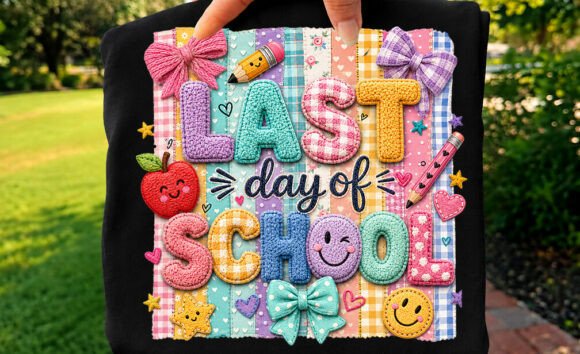
When I first opened the Patchwork Last Day of School Sublimation file, the mood hit immediately. It is warm, nostalgic, and playful without being overly childish. The faux yarn texture gives the whole design a handcrafted, quilt-like feel that makes you think of classroom keepsakes and handmade year-end gifts. The patchwork layout, with those little stitched-looking seams, creates a visual softness that sublimation on its own rarely achieves. As an embroidery designer, I often look for graphics that can work alongside stitched elements, and this one immediately sparked ideas.
The file itself is a single PNG, 4500×5400 pixels at 300 DPI — sharp, generous, and ready to scale. That size opens up a lot of product possibilities right away. The resolution is high enough that you can print it large on a tote or sweatshirt without losing that delicate faux yarn detail. Those tiny crosshatch lines and stitched borders read clearly even when you zoom in, which tells me the designer understood how important it is for a print to hold up on fabric.
Where This Design Really Belongs
I immediately imagined this on a sturdy canvas tote bag, paired with an actual embroidered name or date. The patchwork “Last Day of School” theme feels like a snapshot of childhood, so it naturally fits into personalized teacher gifts, end-of-year party favors, and boutique kid’s apparel. The design has a vintage storybook quality that works beautifully for nursery decor, a pillow cover for a reading nook, or even a soft baby blanket panel.
Because the sublimation is a faux yarn graphic, it doesn’t compete with real embroidery — it complements it. If you are an embroidery designer who also does sublimation blanks, this is one of those rare assets that bridges both worlds. You can print the design onto a cotton-blend sweatshirt and then add a satin stitch outline around the letters or a fill stitch accent on the apple. The contrast between the flat printed patchwork and the raised embroidery thread creates a multisensory product that customers love to touch.
Sublimation + Embroidery: A Layered Look
I often build products where the sublimation acts as the background story and the embroidery adds the personal, dimensional layer. For a last-day-of-school memory piece, I’d print the Patchwork Last Day of School Sublimation onto a tote or a large fabric panel, then embroider the child’s grade, teacher’s name, and year in a simple running stitch. The patchwork design already has a stitched aesthetic, so the real thread blends in seamlessly. The result looks like a fully embroidered piece, but the production time is a fraction of what a full stitch-out would require.
Real-Life Project: A Teacher Gift Tote
Let me walk you through a typical project. I was preparing a small batch of tote bags for a local school’s end-of-year teacher appreciation event. The design needed to feel handmade, nostalgic, and personal. I selected a natural canvas tote, pre-treated for sublimation, and printed the design at about 10×12 inches. The 300 DPI resolution held every detail — the yarn texture, the stitched lettering, the tiny apple and pencil motifs. After pressing, I hooped the tote and added a simple embroidered “Thank You, Mrs. Rivera” with a small fill stitch heart. The combined look was exactly what I wanted: polished, thoughtful, and clearly handmade but not messy.
When I showed the samples to a few fellow crafters, the reaction was immediate. They wanted to know if the design came as an embroidery file. I had to explain that it’s a sublimation PNG, but that the printed texture does a lot of the heavy lifting. If you’re marketing to customers who love the look of embroidery but may not want to pay for a fully stitched piece, this kind of design is a smart middle ground.
How It Performs on Different Products
I tested the design on a few popular blanks to see where it shines and where it needs a little extra care:
- Canvas totes: Excellent. The texture holds, and the print looks crisp. The patchwork effect reads as intentional and crafty.
- Cotton/poly sweatshirts: Great. The yarn details soften slightly on the fabric, which actually adds to the cozy feel. A light-colored garment works best so the stitched lines stay visible.
- Pillow covers: Perfect. The large print area lets the design become a focal point. I’d add a hidden zipper and maybe a small embroidered monogram on the corner.
- Baby onesies: Charming, but scale down carefully. The design is large, so for a tiny onesie, you need to crop or reduce size. Make sure the smallest text and apple details remain clear. I’d test print on paper first.
- Kitchen towels: Works if you stick to the flour sack style. The patchwork theme fits a farmhouse kitchen vibe. Sublimation on a poly towel blends the design nicely, but avoid heavy embroidery over the printed area on thin towels — it can pucker.
- Caps and hats: Tricky. The design is rectangular and detailed, so it doesn’t conform well to the curved front panel of a ball cap. I’d use it on a flat visor or a bucket hat instead.
Important Considerations Before You Use It
This is a digital sublimation graphic, not an embroidery file. You won’t load it into your embroidery machine. You need a sublimation printer, ink, and a heat press, or you can outsource the printing. The design is print-ready, but you still need to test your color settings. The faux yarn texture includes subtle shading, so if your printer is too dark or your press time too long, you might lose the delicate stitched lines. Always test on a scrap of the same blank you’ll use for the final product.
Another point: the design is one large PNG. That means you can’t separate colors or layers for embroidery digitizing unless you trace it manually. If you want to convert it into an embroidery design, you’ll need to redraw elements and assign stitch types. That’s doable, but it’s a digitizing project, not a one-click solution. The licensing for the file should be checked — many sublimation PNGs allow commercial use on finished products, but you must confirm. I always look for a clear commercial use statement before I list anything in my Etsy shop.
Fabric and Blank Selection
For the best results, use a high-polyester count blank. The patchwork design relies on fine lines, so a 100% polyester smooth surface will give you the sharpest print. Cotton blends work but expect a slightly softer, vintage look. I’d avoid heavy textured fabrics like ribbed knits or thick terry cloth because the yarn effect will compete with the actual fabric texture, making the design look muddy. For dark garments, sublimation isn’t an option unless you use a white or light-colored panel. I’d stick to white, cream, or light gray blanks.
Designer Tips for Professional Results
- Test print on paper first. Print a scaled version at 100% on regular paper, and lay it on your blank to see size and proportion. The 4500×5400 pixel file can print up to 15×18 inches, but that’s larger than many tote bags. I usually reduce the image to about 10 inches wide.
- Check thread color contrast if adding embroidery. The design uses warm, muted tones — think soft reds, navy blues, and creams. When you add real embroidery, pick thread colors that either match the palette exactly or intentionally contrast. A bright white embroidered name over the cream patchwork area can disappear, so I’d use a slightly darker off-white or a metallic gold.
- Mind the tiny details. The apple and pencil icons are small. If you shrink the design too much, those details will close up. I keep the design at least 8 inches wide for most products.
- Use a firm stabilizer if you add embroidery over the sublimation. A medium-weight cutaway stabilizer prevents shifting and keeps the stitch area flat. Press the sublimation first, then hoop the piece with stabilizer, and embroider. The heat from pressing may slightly alter the fabric, so do the embroidery last.
- Black and white mockups are your friend. Convert the design to grayscale and see if the patchwork sections still read as distinct. The design should hold up even without color, which tells you the value contrast is solid. It does — the yarn-like outlines keep the visual separation.
How Customers React to the Faux Embroidery Look
When I displayed a finished tote with this design at a small craft fair, shoppers consistently touched the print. The faux yarn texture tricks the eye just enough that people want to feel the stitches. Even though it’s flat, the illusion adds perceived value. I had customers ask, “Is this embroidered?” — and when I explained it’s a sublimation print with a few real stitches added, they were impressed by the clever combination. That kind of reaction builds trust and shows that you’ve put thought into the product.
For handmade shop owners, this design offers a way to offer a premium-looking product without the stitch count that a full embroidery version would require. You can price it competitively, and the production time is shorter. It also photographs beautifully for Etsy listings. The patchwork details catch light in a way that flat graphics often don’t, so your mockup images will look rich and tactile.
Is It Right for Your Craft Business?
If you already sell sublimated apparel, tote bags, or home decor, the Patchwork Last Day of School Sublimation is a solid addition to your design library. It fills a specific seasonal niche — end of school, graduation, teacher appreciation — and the patchwork style stays on trend within the handmade community. The fact that it’s a single PNG at a high resolution means you can use it immediately without worrying about file conversion or vectorization.
If you’re an embroidery-only maker, you’ll need to decide whether you want to add sublimation to your workflow or partner with a sublimation printer. The design itself is not an embroidery file, but it can be a powerful companion to your stitched projects. For those who sell digital embroidery designs, you could use this graphic as a background for product previews or mockups, as long as the license allows it.
Overall, I find this design smartly crafted for makers who appreciate the patchwork, homey aesthetic. It’s not a generic typeface slapped on a screen — the faux yarn texture is intentional and well executed. Use it thoughtfully, combine it with your own embroidery skills, and you’ll create products that feel truly one-of-a-kind.