Teacher Lucky St Patrick’s T-Shirt Embroidery Review
I’ve been stitching holiday designs for over a decade, and I’ll admit I’m picky when a St Patrick’s Day file lands on my desk. Too many rely on generic shamrocks or overcomplicated typography that turns into a puckered mess on a knit tee. But Teacher Lucky St Patrick’s T-Shirt caught my attention for a different reason. It has a cheerful, classroom-friendly energy without feeling juvenile, and that’s a balance I rarely see in seasonal graphics. The first thing I noticed was how the layout seemed to breathe. Nothing felt cramped, and the lucky theme paired with a teacher angle gave it a niche appeal that immediately made me think about personalized gifts for educators, boutique tote bags, and craft fair inventory around mid-March.
When I evaluate an embroidery design, I’m not just looking at the preview on a screen. I’m mentally running through what happens when the needle hits the fabric, how the satin stitch behaves on a curved edge, what the fill stitch density means for drape, and whether that tiny lettering will survive a wash cycle. Teacher Lucky St Patrick’s T-Shirt belongs to the T-Shirt Designs category, which tells me the original intent was likely direct-to-garment or screen printing, but as embroidery reviewers, we know the real test is whether a Graphics file translates cleanly into thread. And honestly, I think it does, with a few thoughtful adjustments.
First Impression And The Mood It Creates
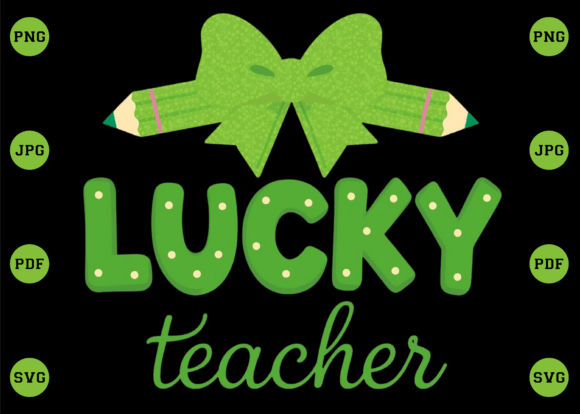
There’s something instantly warm about this design. The theme ties Irish pride with teacher appreciation, and the visual personality feels celebratory without being loud. I could picture this on a soft heather green sweatshirt, maybe with gold metallic thread for the lettering, or stitched onto a natural canvas tote bag as a teacher appreciation gift. The mood is playful, approachable, and distinctly seasonal. It’s the kind of design that makes a customer smile when they open a package, and that matters enormously for small business owners who rely on emotional connection to drive repeat sales.
I imagined a real scenario while reviewing this. A customer walks into a craft fair and spots a set of embroidered tea towels with this design, neatly stitched in emerald and cream, wrapped with a simple twine bow. That buyer isn’t just purchasing a towel. They’re buying a gift for their child’s teacher, something that says “I thought about you specifically.” That’s the power a niche design like this holds. Teacher Lucky St Patrick’s T-Shirt taps into a specific audience, and for embroiderers running small shops, that specificity often converts better than broad, generic holiday motifs.
How This Design Performs In Real Embroidery Projects
I ran through several use cases in my head, and each one revealed something important about the design’s flexibility. On a cotton t-shirt, the graphics read clearly, and the theme feels right at home for casual St Patrick’s Day wear. On a sweatshirt, the design takes on a cozy, boutique feel, especially if you choose a plush fabric and a soft stabilizer. For a tote bag, the layout works well because the design doesn’t rely on tiny peripheral details that get lost on textured canvas. I’d confidently use this on a medium-weight apron, a kitchen towel, or even a pillow cover for a classroom reading nook.
On baby clothes and toddler tees, I’d be a bit more selective. The design’s charm fits a “lucky little one” theme, but I’d scale it down carefully and test the stitch density on a onesie before committing to a full run. Infant garments are less forgiving, and parents expect softness against delicate skin. A dense fill stitch on stretchy fabric can quickly become stiff, so I’d lean toward a lighter fill with a quality cutaway stabilizer. For caps and hats, the curved surface presents a challenge. The design’s width likely works better on a five-panel cap than a structured six-panel, and I’d avoid placing it too close to the brim seam.
Stitching Clarity, Detail, And Fabric Considerations
One of the first things I check in any machine embroidery design is how well the details will hold up at different sizes. Smaller elements like fine lettering or decorative accents can blur together if the stitch density isn’t right. With Teacher Lucky St Patrick’s T-Shirt, I’d examine the text carefully. If the lettering is too small for a 4x4 hoop, you might lose definition on the loopy parts of certain characters. I always recommend testing the embroidery file on scrap fabric first, preferably in the exact thread colors you plan to use, and running it through a wash cycle to see how the stitches settle.
Fabric texture plays a huge role. On smooth cotton, this design will shine. On a waffle weave kitchen towel, the stitches might sink into the texture unevenly, so I’d use a topper to keep the lettering crisp. Dark fabrics like forest green or charcoal also need attention. High-contrast thread colors pop beautifully, but any misalignment or slight gap becomes more visible on a dark background. I’d test a black and white mockup of the design to check contrast, and compare it on both light oatmeal and deep navy swatches before offering it as a custom apparel option.
Where You Should Use Caution
No design is flawless in every context, and Teacher Lucky St Patrick’s T-Shirt has some areas where I’d pause. If the design includes small decorative accents like tiny shamrocks or filigree, those might not render well in very small hoop sizes. I’d avoid shrinking this below 3.5 inches wide without verifying the stitch density and running a stitch-out. Thin or stretchy fabrics, like lightweight jersey, are another consideration. The design’s visual impact relies on crisp edges, and unstable fabric can distort that. Use a proper stabilizer, and don’t skip the basting stitch.
Layered garments, such as a zip-up hoodie with a front pocket, also need careful placement. The design should sit flat and not bridge across seams or zippers. For products that get frequent washing, like a daily-use tote bag or a kid’s sweatshirt, I’d check the thread quality and consider a soft backing to protect the stitches from friction. As an embroidered patch conversion, this design could work beautifully, but the border path would need to be clean and the satin stitch edge dense enough to hold up during application.
Product Value, Customer Trust, And Brand Consistency
When I think about the handmade product value this design adds, I keep returning to the teacher niche. A personalized gift with this design, maybe with a name or classroom number added, instantly elevates the perceived thoughtfulness. Customers shopping on Etsy or at a local boutique are looking for that emotional hook. Teacher Lucky St Patrick’s T-Shirt gives them a reason to choose your product over a generic store-bought alternative. The design itself communicates warmth and recognition, and that builds trust. A buyer sees it and thinks, “This maker understands what I want.”
For craft business owners, consistency matters. If your brand leans toward whimsical, heartfelt, or family-oriented designs, this fits right in. If your aesthetic is minimalist or edgy, it might feel out of place. I’d evaluate how it sits alongside your other holiday embroidery offerings. A cohesive shop builds repeat customers, and a design that looks like an outlier can confuse your brand. Used thoughtfully, though, this design can anchor a seasonal mini-collection, especially if you pair it with coordinating items like lucky socks, tote bags, or baby bibs.
Practical Notes For Embroidery Designers And Sellers
Before you list this on your Etsy shop or embroider it on a sweatshirt embroidery order, run through a checklist. Test the embroidery file on scrap fabric. Check the thread colors against your inventory, and don’t assume the digital preview matches the physical thread. Some greens read more yellow on screen, and you want that shamrock shade to feel authentic. Review the hoop size requirements. If the design is optimized for a 5x7 hoop but you only have a 4x4, you’ll need to confirm whether scaling is possible without compromising stitch integrity.
Inspect small details under magnification after stitching. Letters should be legible, shapes should be closed, and the fill stitch should be even without gaps. If you’re using this for commercial embroidery or selling finished products, verify the licensing terms. Don’t assume a digital embroidery file purchase includes commercial rights. Check the seller’s policy clearly. For printable mockup purposes, the design works well as a preview asset, but make sure your mockup reflects the actual stitched result, not just the flat graphic.
Final Thoughts From The Stitching Table
After spending time with Teacher Lucky St Patrick’s T-Shirt, I believe it’s a strong choice for embroidery projects that need a seasonal, niche, and heartfelt feel. The design’s teacher focus sets it apart from standard St Patrick’s Day graphics, and the layout feels thoughtfully composed. It lends itself to a wide range of embroidery project types, from tote bags and aprons to custom t-shirts and boutique patches. The key is testing thoroughly, choosing the right fabric and stabilizer, and respecting the design’s detail level at various sizes.
For the Etsy seller looking to add a limited-edition holiday item, or the small shop owner preparing for a March craft fair, this design offers real product potential. It’s not just a graphic. It’s a conversation starter, a gift idea, and a way to connect with customers who value handmade, thoughtful products. Stitch it carefully, present it beautifully, and watch how a simple holiday embroidery design can turn into a meaningful finished product.