Evaluating a Classic School Vector Design for Real Embroidery Projects
When you’re staring at a vector design file on your screen, deciding whether it’s worth the hoop time, you need to think like a stitcher, not just a buyer. Today, I’m looking at School Building Children Vector Art from that exact perspective. This isn’t a spec sheet review; it’s a practical judgment of how this black and white illustration would translate into thread on fabric for my client projects and my own shop’s products.
The Immediate Mood and Where It Belongs
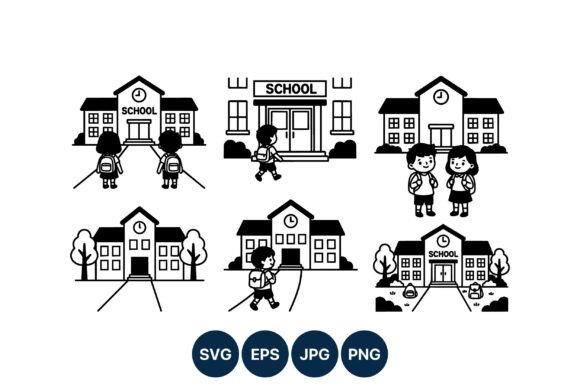
First impression? This is a nostalgic, structured, and friendly scene. The multiple buildings with clock towers establish a classic institutional feel, while the children with backpacks—some walking, some standing—inject life and movement. It’s not a chaotic cartoon; it’s an orderly, almost storybook illustration. The black and white vector format means it’s built on clear lines and shapes, which is a fantastic starting point for embroidery. The mood it creates is one of tradition, learning, and community. That tells me immediately that this design isn’t for edgy streetwear; it’s for sentimental, giftable, and personalized items.
My mind goes straight to a few project types. A custom embroidered tote bag for a teacher. A commemorative sweatshirt for a graduating kindergarten class. A delicate, smaller version on a baby blanket or nursery pillow cover for a family whose life revolves around the local school. It would also make a beautiful, detailed patch for a backpack or apron. The theme is specific, but powerfully evocative, which is gold for a small business owner targeting niche occasions.
Performance in Real-World Embroidery Situations
Let’s get practical. How does School Building Children Vector Art perform when you actually run the machine? The key here is detail level. The buildings have architectural elements like windows, doors, and those clock towers. The children are small figures with distinct poses and backpacks. This is a design that demands a medium to large hoop size to maintain clarity. Trying to cram this onto a small cap or a tiny baby sock would likely lose the charming details of the children and the buildings’ features.
For a standard sweatshirt or tote bag project, this design would shine. The solid shapes of the buildings are perfect for clean fill stitches, while the finer lines outlining the children and details could be beautifully executed with running stitches or careful satin stitch borders. On a tea towel or pillow cover, where the fabric is less textured, the contrast would be crisp and professional. For a boutique product like an embroidered linen apron, it would feel high-value and handmade, not generic.
I also think about digital product sellers and craft businesses. This School Building Children Vector Art, as a graphic, could be a superb base for printable mockups to sell digital embroidery files or as part of a branding kit for an educational-focused shop. The vector nature implies scalability, which is crucial for creating a consistent look across different product mockups.
Where to Exercise Caution and Designer Notes
Not every fabric or product is a perfect match. Here’s where you need a careful eye.
- Small Hoop Sizes: As mentioned, shrinking this design risks muddling the scene. The children’s figures could become blobs.
- Textured or Stretchy Fabrics: On thick knits or very stretchy material, the detailed linear elements might distort. Proper stabilizer is non-negotiable here.
- Dark Fabric Backgrounds: This is a black and white design. On dark fabric, you’d be relying solely on white or light thread for the entire image, which can change the visual weight and impact. Test it in a mockup first.
- Curved Surfaces: Embroidering this on a curved cap brim would present a challenge with the long, horizontal building lines.
- Dense Stitch Areas: The buildings could become very dense if programmed as solid fill stitch blocks. Review stitch density in your software to ensure it’s suitable for your chosen fabric weight to avoid stiffness.
A few essential steps I’d take before committing to a real project:
- Always test on scrap fabric of the same type you’ll use for the final product.
- Check thread color contrast—does pure black and white work, or might a soft gray add depth?
- Inspect the small details in the digitized file, like the children’s hands and backpack straps, to ensure they are clear and not too fragile for stitching.
- Confirm the licensing terms of the original graphics file. Can it be used for commercial embroidery projects, like items you sell in your Etsy shop or at craft fairs?
How This Design Elevates Your Finished Product
Choosing a design like this isn’t just about aesthetics; it’s about perceived value. On a custom apparel item, like a hoodie for a school team, it conveys a sense of unity and identity. As a personalized gift—think an embroidered pillow for a retiring principal—it feels thoughtful and specific, far beyond a generic text monogram. For your craft business, offering a product with this level of illustrative detail builds customer trust. It shows you select designs with character, which enhances your brand’s consistency and professionalism.
The recognition factor is high. It’s a school scene, instantly understandable and emotionally resonant. That drives buyer engagement. Someone looking for a “teacher gift” or “back to school memento” would see an embroidered item featuring this design and immediately connect with it. That’s the power of a well-chosen, thematic embroidery file.
Final Thoughts for the Working Designer
School Building Children Vector Art is a robust, thematic illustration that, with proper handling, can become a standout element in your embroidery portfolio. It’s best suited for projects where its narrative quality can be fully appreciated—on gifts, commemorative items, and niche market products. Approach it with respect for its detail, test thoroughly for your specific application, and it will reward you with a clean, evocative, and professional-looking finished product. Remember, the best embroidery designs aren’t just files; they’re stories waiting to be stitched.